Where to Order Custom Embroidered Patches for Club Jackets Online
When your club jackets need a professional, consistent look, ordering custom embroidered patches online can be straightforward—as long as the supplier helps you choose the right size, border, backing, thread colors, and attachment method.
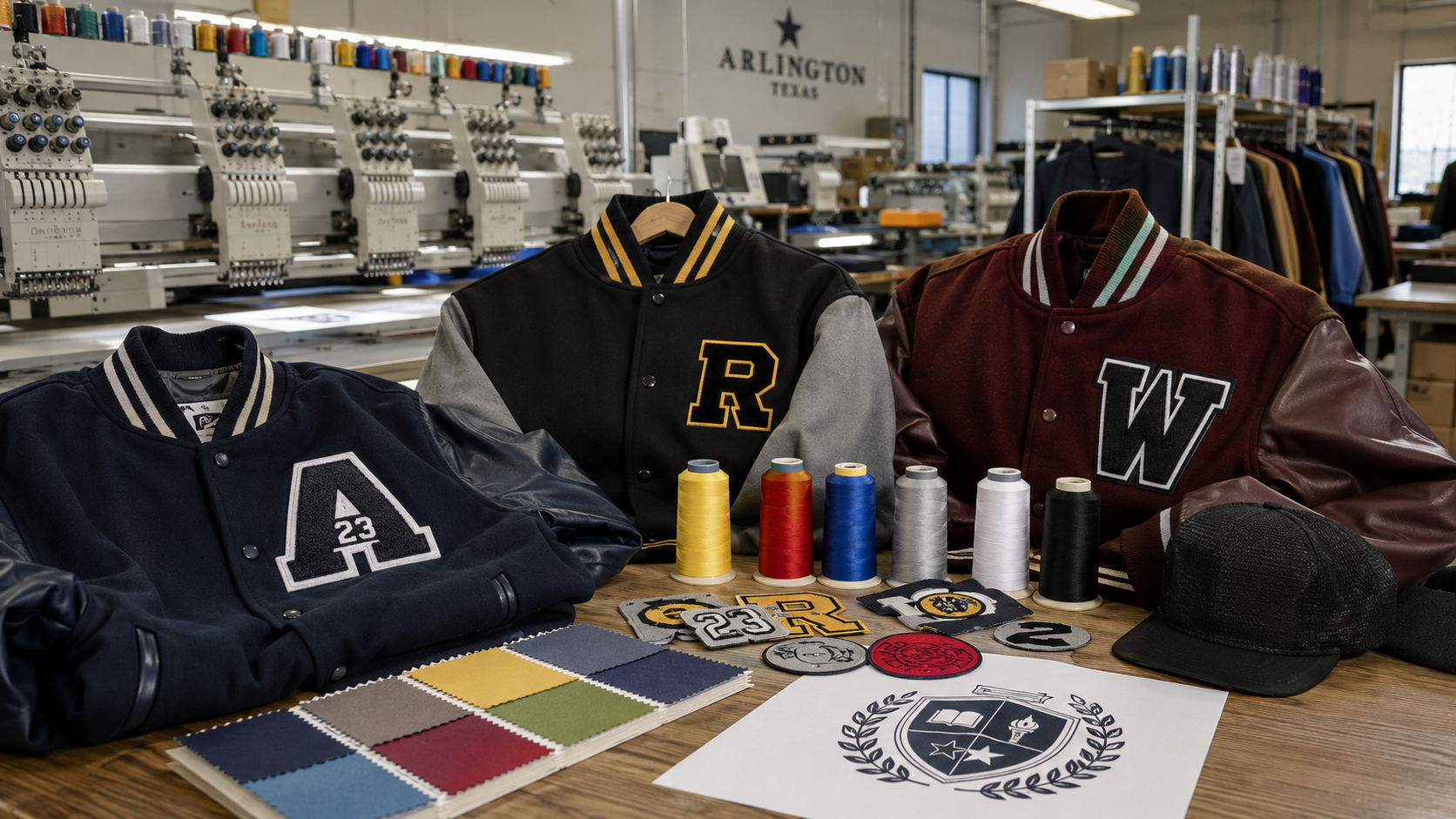
Quick answer: Where should you order?
You can order through Apparel Junction’s embroidery service. Send your artwork or concept, quantity, preferred patch size, backing choice, colors, and jacket details. A production specialist can review the design, identify potential stitch or placement problems, and provide a quote before production begins.
For clubs in Arlington, Dallas–Fort Worth, or elsewhere in the United States, this approach gives you online convenience with access to a real custom apparel shop when questions come up.
Why club jacket patches require more planning than a basic logo
A patch is a separate decorated piece that must look good by itself and after it is attached to a jacket. That makes the artwork shape, edge finish, stitch coverage, backing, and jacket construction all important.
A bold emblem with clean lettering usually converts well to embroidery. Very small text, thin outlines, gradients, distressed textures, or photographic details may need to be simplified. In some cases, woven patches are a better choice because woven construction can reproduce finer detail than traditional embroidery.
Expert tip
Do not approve a patch by looking only at the logo on a computer screen. Review the proposed physical size, lettering height, border shape, and the jacket location. A design that looks clear at eight inches wide may become crowded at three inches.
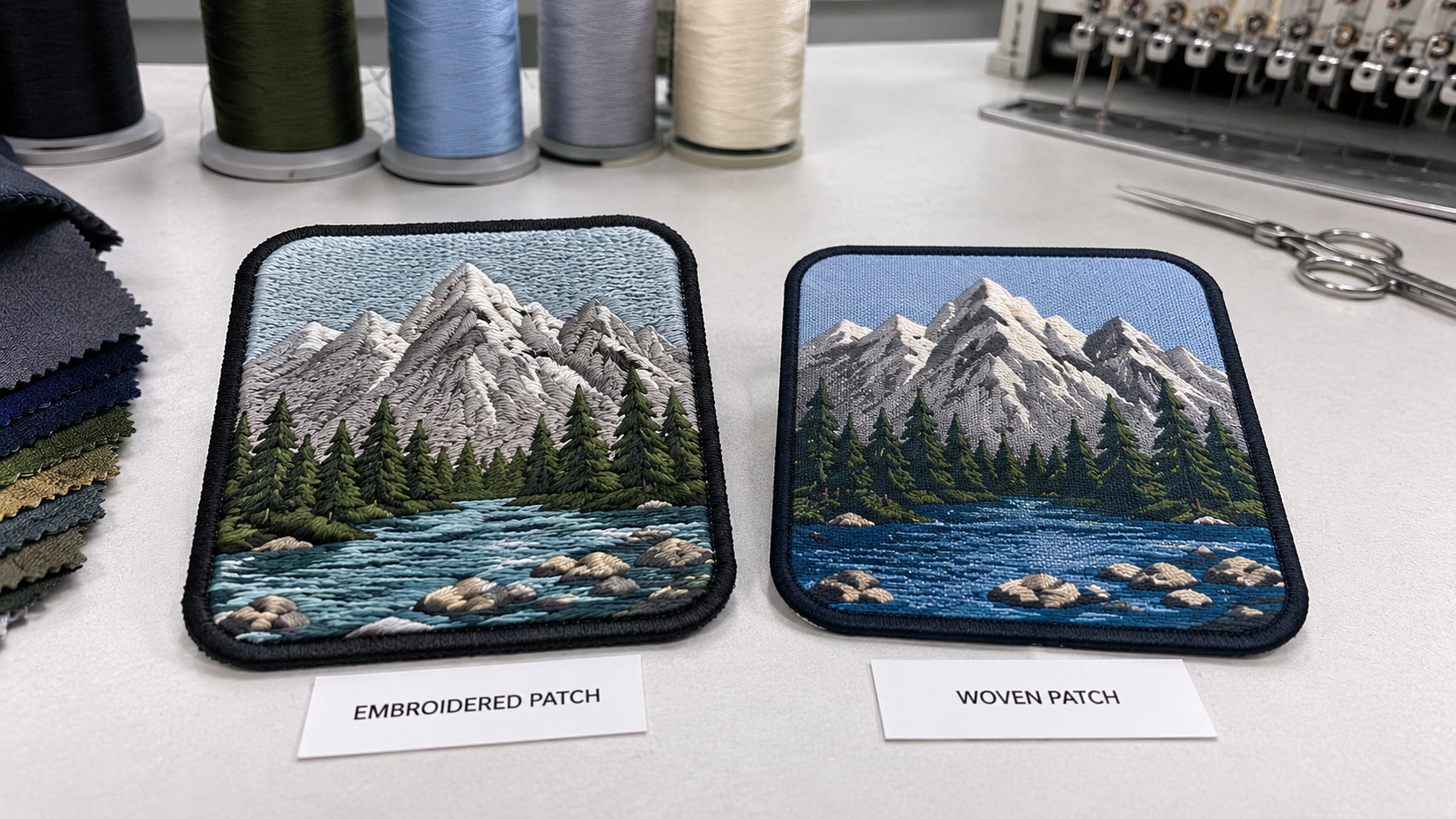
Custom embroidered patches: choose the right construction
| Patch option | Best use | Advantages | Watch for |
|---|---|---|---|
| Embroidered patches | Traditional club emblems, uniforms, chest logos, and bold back designs | Raised thread texture, durable appearance, classic embroidered finish | Very fine details and tiny lettering may need simplification |
| Woven patches | Detailed logos, smaller lettering, thin lines, and complex artwork | Finer detail and a smoother surface | Less raised texture than embroidery |
| Chenille patches | Varsity styles, initials, mascots, and large statement pieces | Bold dimensional texture and classic letter-jacket appearance | Not ideal for small intricate details |
| Printed patches | Gradients, illustrations, photographs, and highly detailed graphics | Broad color range and detailed reproduction | Different visual character from stitched embroidery |
Which patch backing is best for a club jacket?
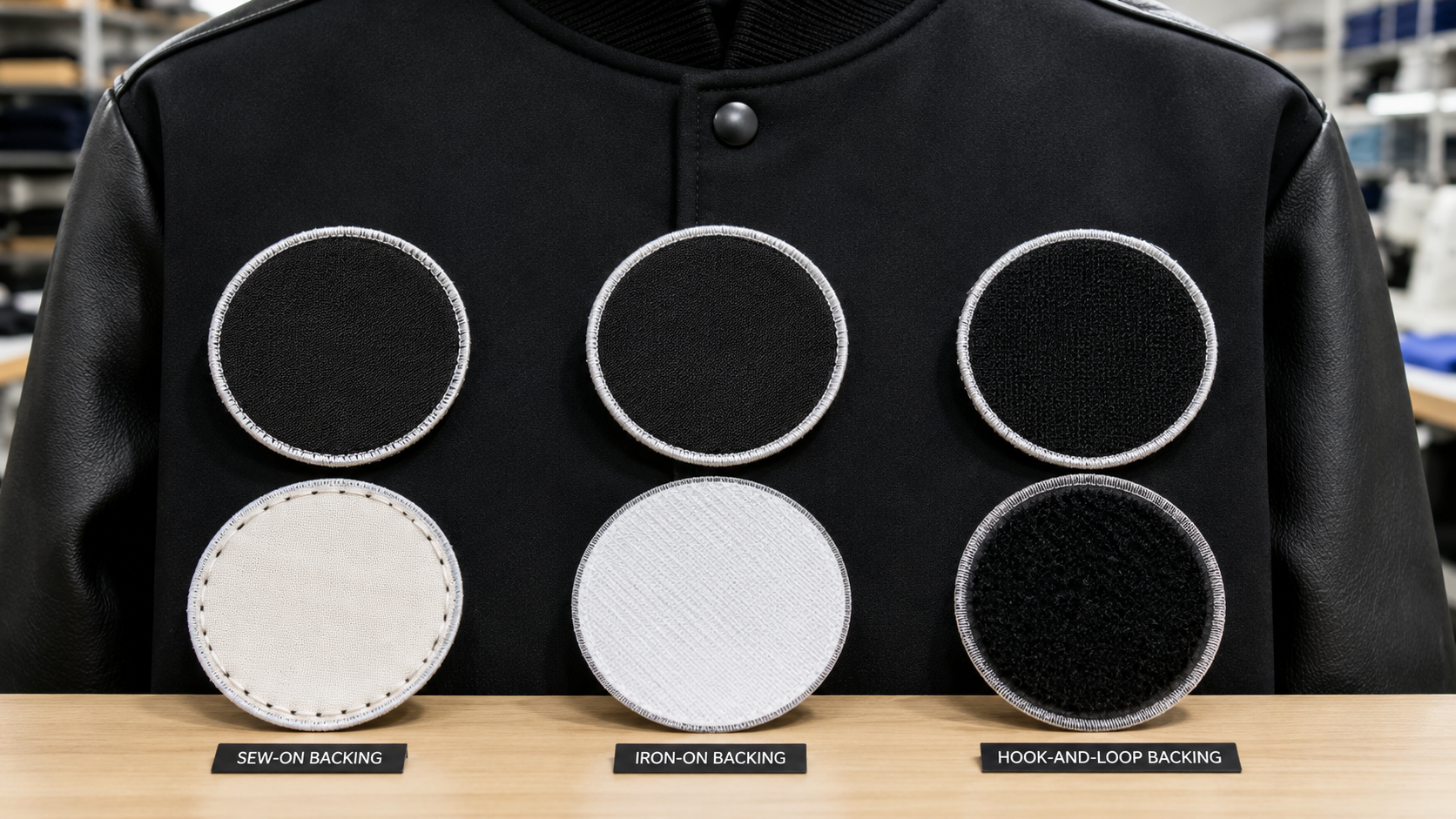
The backing determines how the patch will be attached and whether it can be removed later. The jacket fabric and lining matter just as much as the patch itself.
| Backing | Recommended for | Main benefit | Important consideration |
|---|---|---|---|
| Sew-on backing | Permanent club jacket placement | Secure, durable attachment across many jacket materials | Lined jackets may require access to the inside or careful finishing |
| Iron-on backing | Compatible cotton or cotton-blend garments | Convenient initial placement | Heat can damage some coatings, synthetics, leather, or water-resistant fabrics |
| Hook-and-loop backing | Interchangeable names, roles, chapters, or event patches | Easy removal and replacement | The jacket needs a matching loop panel |
| Peel-and-stick backing | Temporary positioning or short-term display | Fast placement without immediate sewing | Usually not the best permanent solution for wearable jackets |
Best all-around choice for permanent use
For most club jackets, sew-on backing is the safest long-term recommendation. It avoids relying on heat-sensitive adhesive and can be secured around the full border. For removable identifiers, hook-and-loop backing is usually the better choice.
How to choose patch size and placement
Start with the actual usable jacket panel rather than choosing a size from memory. Pockets, seams, vents, zippers, shoulder curves, reflective strips, and lining construction can restrict placement.
Common placement ranges
- Left or right chest: often about 3 to 4 inches wide.
- Sleeve: commonly about 2.5 to 4 inches, depending on the sleeve panel.
- Large back patch: often about 9 to 12 inches or larger, depending on the jacket and design shape.
- Name or role patch: sized around the text length and minimum readable letter height.
These are planning ranges, not fixed rules. Measure the jacket and make a paper template before approving production. Place the paper template on the garment, step back, and check whether it looks balanced when worn.
What makes an embroidered patch look professional?
Professional results depend on more than stitch count. The strongest patches combine artwork that is suitable for thread with disciplined production choices.
- Readable lettering at the final size
- Clean separation between colors
- Enough contrast between the patch and jacket
- A border that follows the intended shape
- Consistent thread colors across the order
- Proper backing for the jacket material
- A proof showing size and color assignments
- Placement checked against seams and pockets
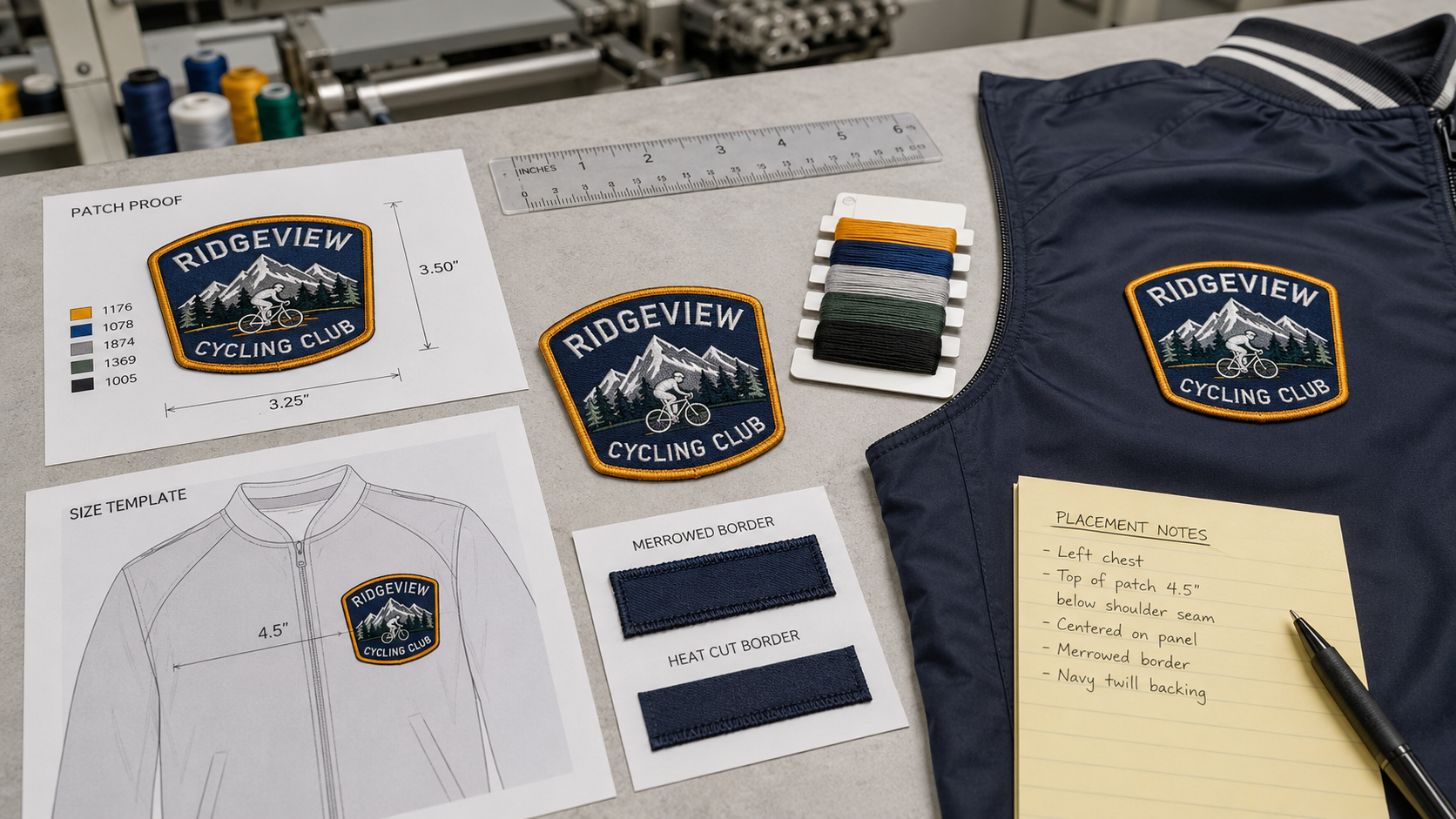
What to send for an accurate patch quote
A complete request helps prevent delays and vague estimates. Send as much of the following information as possible:
- Artwork: AI, EPS, SVG, editable PDF, or a clean high-resolution image.
- Quantity: include expected extras for future members or replacements.
- Finished size: width and height in inches.
- Patch type: embroidered, woven, chenille, or printed.
- Backing: sew-on backing, iron-on backing, or hook-and-loop backing.
- Border: merrowed edge or heat-cut edge, depending on the shape.
- Colors: club colors, brand standards, or Pantone references when available.
- Jacket details: fabric, lining, brand/style number, and placement photos.
- Deadline: the date the finished order must be in hand—not only the event date.
- Delivery location: especially when shipping to multiple chapters or members.
Include the jackets when installation is needed
Ordering loose patches is different from ordering patches installed on jackets. If Apparel Junction will also attach the patches, provide the jacket style, quantities by size, placement instructions, and whether the garments are lined, insulated, water-resistant, or leather.
Common ordering mistakes to avoid
- Choosing size without measuring the jacket. A back patch can interfere with seams, vents, or hood construction.
- Using tiny text. Letters need enough height and spacing for thread to form cleanly.
- Assuming iron-on backing works on every fabric. Heat may damage coatings, synthetics, leather, or water-resistant finishes.
- Skipping the proof. Confirm spelling, dimensions, colors, backing, border, and quantity before production.
- Ordering the exact member count. Clubs often need replacements, samples, or patches for new members.
- Ignoring installation. Ask who will sew or attach the patches and how lined jackets will be handled.
- Waiting until the event week. Artwork revisions, proof approval, production, attachment, and shipping all require time.
Online ordering with local production support
Online ordering is convenient, but club jacket projects often benefit from a supplier that can discuss the garment as well as the patch. Apparel Junction provides custom apparel services, embroidery, and apparel product options for organizations that need patches, jackets, or a coordinated uniform program.
Clubs with recurring member orders may also benefit from an online company store, allowing approved apparel and accessories to be organized in one place.
Helpful resources before you submit artwork
- Adobe’s guide to creating scalable vector logo artwork
- Pantone information about consistent color standards
- FTC apparel care-labeling information
These references can help with logo preparation, color communication, and garment care. Your production proof remains the controlling reference for the patch order.
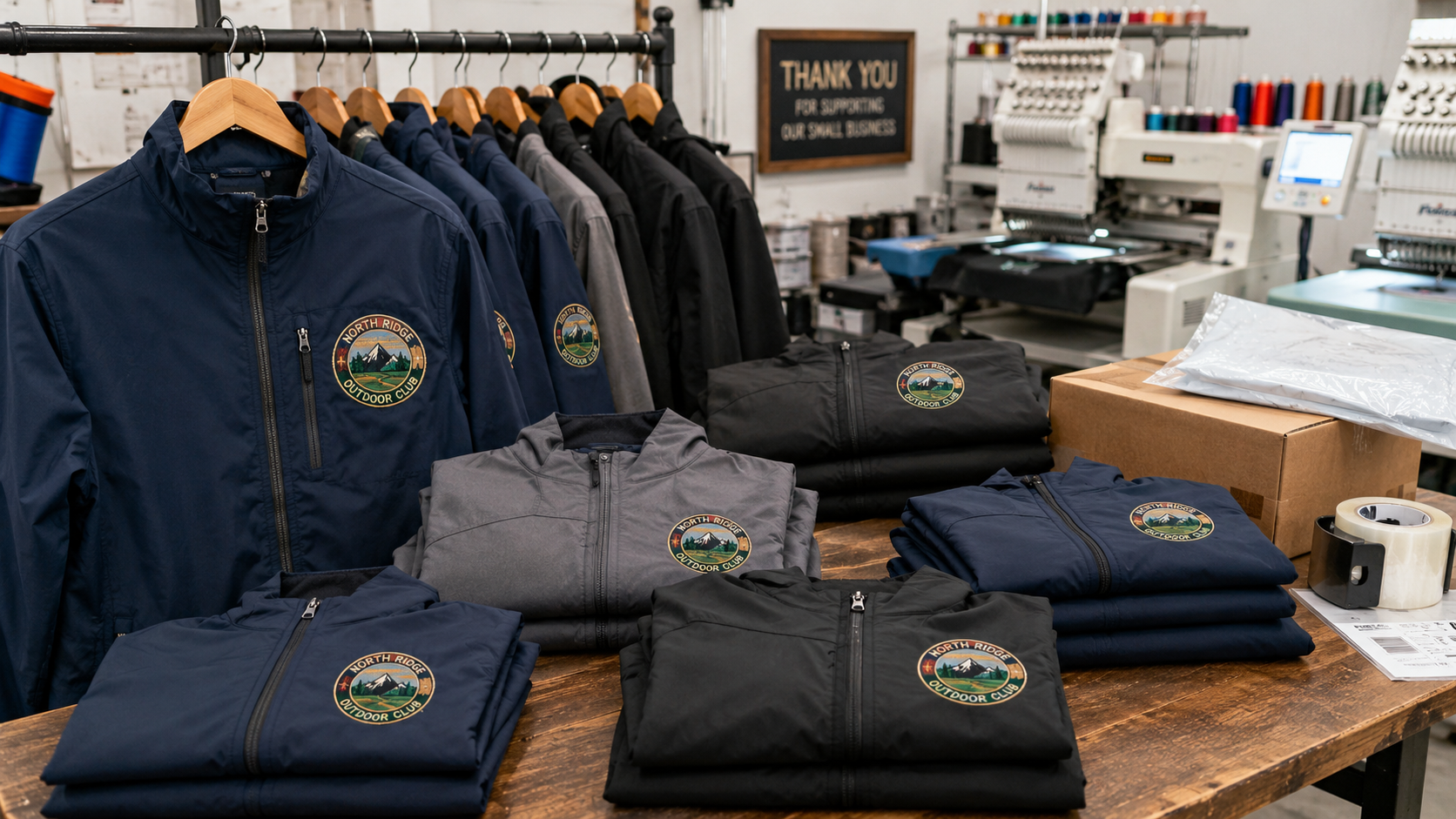
Ready to order patches for your club jackets?
Apparel Junction can help you order custom embroidered patches, choose the appropriate backing and border, review artwork for stitch clarity, and coordinate installation when needed. Send your design, quantity, size, jacket information, and deadline for a practical recommendation and quote.
Request a Custom Patch QuoteFrequently asked questions
Where can I order custom embroidered patches for club jackets online?
You can order custom embroidered patches online through Apparel Junction. Send your logo or concept, patch size, quantity, colors, backing preference, and jacket details so the team can recommend the right construction and prepare a clear quote.
What backing is best for patches on club jackets?
Sew-on backing is usually the most dependable choice for permanent placement on club jackets. Hook-and-loop backing is better when patches must be removed or changed. Iron-on backing can work on compatible fabrics, but it may still benefit from sewing around the edge.
How large should a club jacket patch be?
Small chest patches are often about 3 to 4 inches wide, while large back patches may be 9 to 12 inches or more depending on the jacket. The best size depends on the artwork shape, jacket panel, seams, vents, and the visual impact your club wants.
Can small text be embroidered clearly on a patch?
Small text can be embroidered, but letters need enough height and spacing to remain legible. A production specialist may recommend simplifying the font, increasing the patch size, or using a woven patch when the design contains very fine details.
Do I need a vector file to order patches?
A vector file such as AI, EPS, or editable PDF is helpful, but it is not always required. A clean, high-resolution PNG or JPG may be enough for quoting. Apparel Junction can review the artwork and explain whether redrawing or cleanup is needed.
How should I care for a jacket with an embroidered patch?
Follow the jacket manufacturer’s care label first. Close zippers, turn the jacket inside out when practical, use a gentle wash cycle, and avoid high heat unless the garment instructions allow it. Sew-on custom embroidered patches generally provide the most secure long-term attachment.