Eco-Friendly Custom T-Shirt Printing: 7 Smart Options to Compare
Choosing an eco-friendly custom T-shirt printing service is less about finding one company that uses the word “green” and more about matching a verified garment, an efficient print method, and a realistic order quantity to your actual needs. The best result is a shirt people will wear repeatedly—not an expensive “sustainable” shirt that sits unused.
Quick answer: What are the best eco-friendly custom T-shirt printing options?
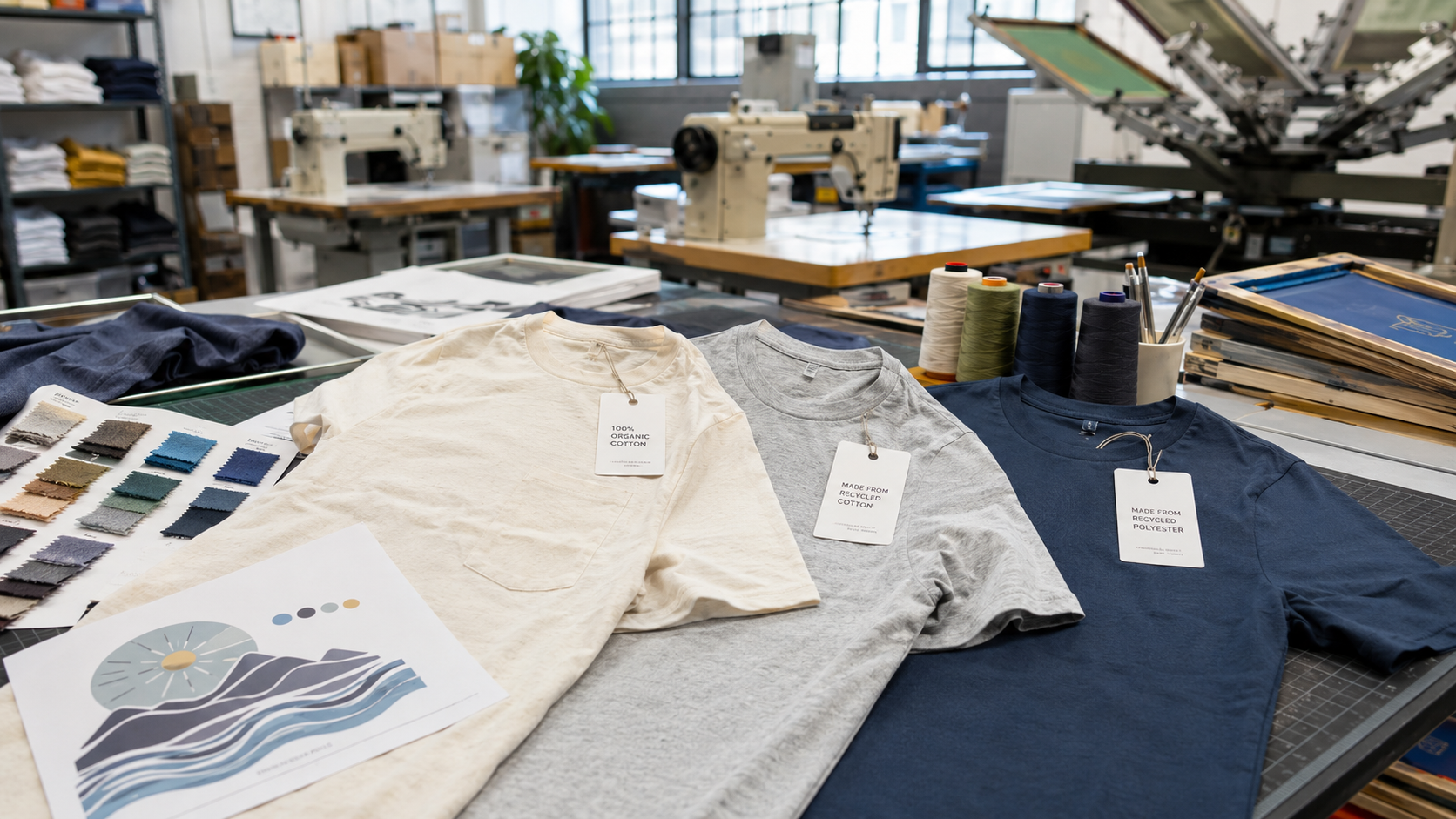
Start by comparing seven practical options: certified organic cotton, recycled cotton, recycled polyester, durable blended shirts, responsibly sourced conventional cotton, local or regional production, and right-sized on-demand or short-run printing. Then ask the printer to document the specific fabric content, certification, decoration method, packaging, and fulfillment plan.
For most businesses, the smartest combination is a durable shirt with a verifiable material claim, a print method suited to the order size, and a carefully planned size breakdown that prevents leftovers.
What “eco-friendly” should mean in a custom shirt order
“Eco-friendly” is not one universal product specification. It can refer to raw materials, chemical safety, water use, energy use, worker standards, production location, packaging, shipping, durability, recyclability, or waste reduction. A buyer should decide which of those priorities matter most before requesting quotes.
The Federal Trade Commission advises businesses not to make broad, unqualified environmental benefit claims. That same principle is useful for buyers: ask for specific facts instead of accepting vague labels. A supplier should be able to explain what is better about a garment and what evidence supports the claim.
A practical sustainability rule
The lowest-impact shirt is often the one that fits well, survives repeated washing, represents the brand professionally, and gets worn for years. Durability and actual use belong in the same conversation as fiber content and ink chemistry.
7 eco-friendly custom T-shirt printing options
1. Certified organic cotton shirts
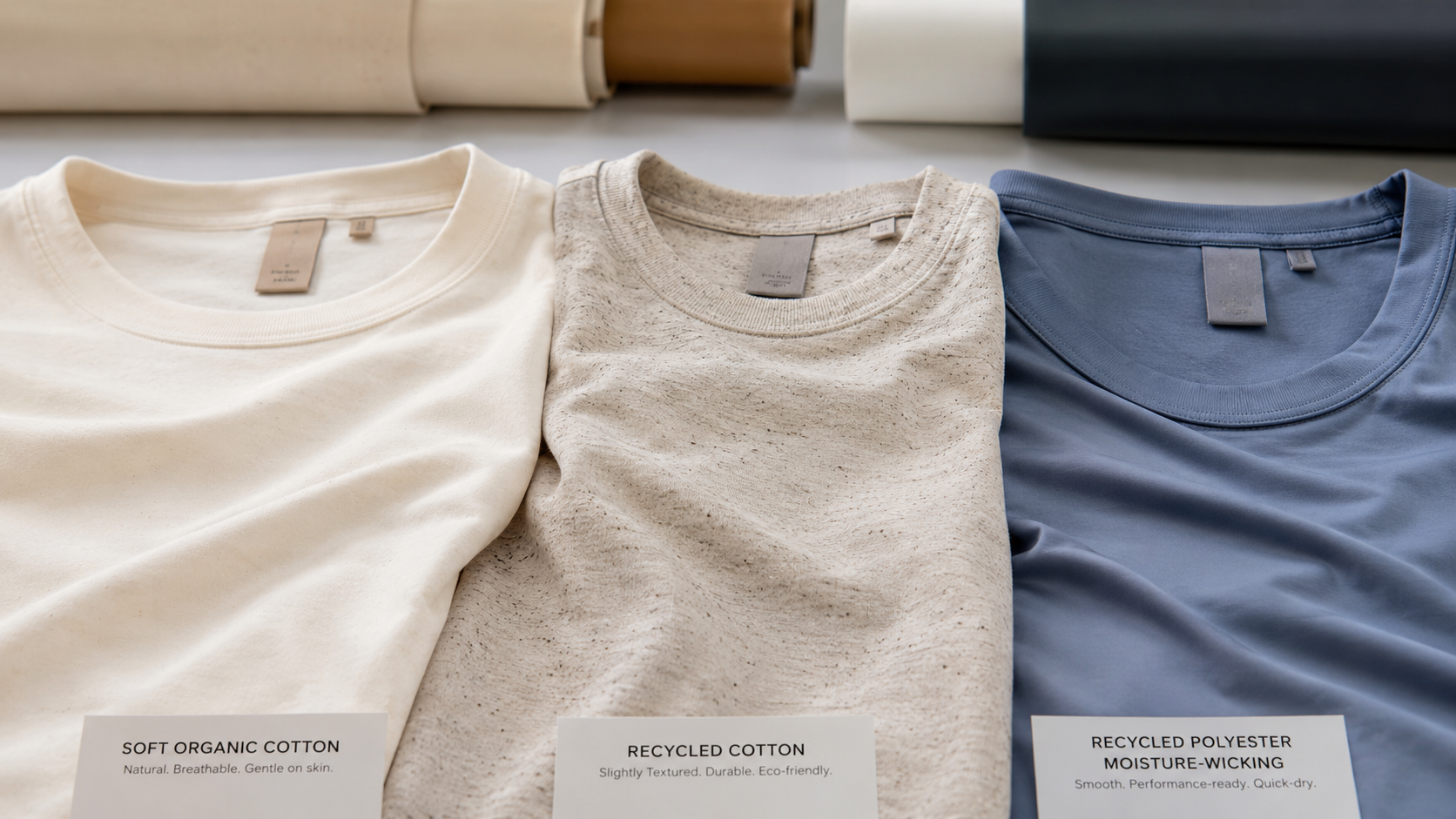
Organic cotton can be a strong choice for soft employee shirts, event apparel, customer gifts, and branded merchandise. Look for a garment-specific certification or content claim rather than relying on a product name alone. Organic cotton shirts may cost more and may have fewer color, size, and inventory options, so availability should be confirmed early.
2. Recycled cotton shirts
Recycled cotton uses recovered textile material, which can reduce demand for virgin fiber. These shirts often have a slightly heathered or textured appearance and may be blended with other fibers for strength. Ask for the recycled-content percentage and whether the claim is independently verified.
3. Recycled polyester performance shirts
For outdoor crews, fitness events, summer trade shows, or employees who need moisture management, recycled polyester can be more useful than cotton. It turns recovered plastic-based material into performance fabric, but it is still a synthetic textile. Evaluate comfort, snag resistance, wash life, and the specific recycled-content claim.
4. Durable cotton-polyester blends
A blend is not automatically the most environmentally preferred fiber choice, but a durable, easy-care shirt that employees wear frequently can outperform a delicate garment that is quickly replaced. Blends are often practical for uniforms because they resist shrinking, dry faster, and hold their shape.
5. Responsibly sourced conventional cotton
When certified organic inventory does not meet the budget, color, size range, or deadline, a high-quality conventional cotton shirt can still be a responsible choice. Prioritize durability, accurate ordering, useful design, and a supplier that can provide clear product information.
6. Local or regional decorating and fulfillment
Working with a nearby production partner can simplify proofing, reduce reshipments, and make it easier to inspect garment samples before a full run. For businesses in Arlington, Dallas, Fort Worth, and surrounding North Texas communities, a local partner also offers a practical way to discuss deadlines and pickup options.
7. Right-sized short runs or on-demand programs
Producing only what will be used can prevent the most visible form of apparel waste: boxes of incorrect sizes and outdated logos. Small digital runs, scheduled reorders, and managed company stores can help organizations avoid guessing an entire year’s demand at once.
| Option | Best for | What to verify | Potential trade-off |
|---|---|---|---|
| Certified organic cotton | Soft staff shirts, merch, events | Certification, cotton percentage, exact style | Higher cost or limited inventory |
| Recycled cotton | Casual branded apparel | Recycled percentage and verification | Texture and color variation |
| Recycled polyester | Performance and outdoor use | Recycled content, fabric weight, wash care | Synthetic fiber considerations |
| Durable blend | Uniforms and frequent washing | Fiber mix, shrinkage, replacement cycle | Harder to recycle at end of life |
| Local production | North Texas organizations and rush coordination | Where garments and decoration are produced | Blank garments may still travel long distances |
| Short-run or managed store | Changing teams, multiple departments | Minimums, reorder consistency, fulfillment fees | Higher unit price at low quantities |
Choose the print method based on the order—not a slogan
The decoration method can affect setup, waste, durability, color, feel, and price. There is no single method that is automatically best for every sustainable order.
Screen printing
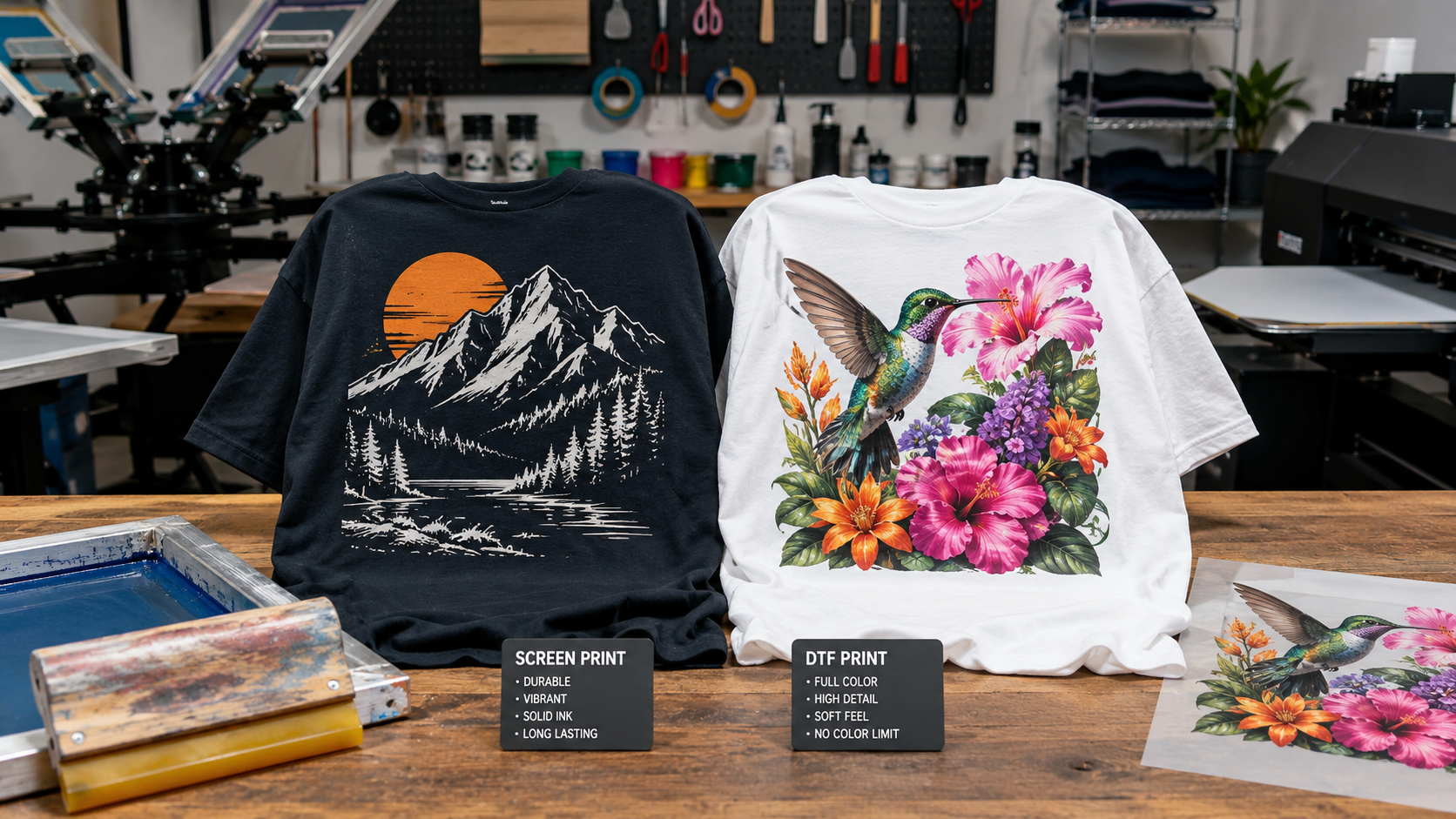
Often efficient for planned quantities with repeat artwork and a limited number of colors. It can deliver excellent durability and low unit cost at volume. Ask about ink system, curing, cleanup, test pieces, and minimums.
DTF printing
Useful for detailed, full-color art and smaller mixed orders. It can reduce screens and color-separation setup, but it uses a transfer film and adhesive. The best choice depends on garment fabric, order size, and expected wear.
Direct-to-garment or other digital printing
Can be practical for lower quantities and complex artwork. Pretreatment, ink certification, garment composition, production efficiency, and print durability should all be considered.
Embroidery
Usually not the first choice for a large T-shirt graphic, but it can be durable for polos, jackets, hats, and small left-chest branding. A long service life may justify the higher decoration cost.
How to evaluate an eco-friendly custom T-shirt printing service
- Ask for exact garment style numbers. Sustainability claims should connect to the product being quoted.
- Request fiber percentages. “Recycled” could mean a small percentage or nearly the entire garment.
- Check certification scope. Confirm whether the certification covers fiber content, chemical safety, processing, or a different attribute.
- Compare durability. Review fabric weight, shrinkage, construction, print wash life, and intended use.
- Plan quantities carefully. Use employee size collection, preorders, or a company store instead of adding large speculative overages.
- Review packaging and fulfillment. Ask whether shirts can be bulk packed rather than individually bagged and whether multiple locations can be consolidated.
- Order a sample when practical. A sample can prevent an entire run from being rejected because of fit, hand feel, color, or print placement.
Certifications and claims worth understanding
Certifications do not make every decision for you, but they can replace vague marketing with traceable criteria. Textile Exchange maintains standards related to organic and recycled material claims. OEKO-TEX STANDARD 100 focuses on testing textiles for harmful substances. The FTC Green Guides explain how environmental marketing claims should be qualified and substantiated.
Helpful independent resources
Common mistakes that increase cost and waste
- Choosing a shirt based only on an “eco” product label without reviewing the exact material claim.
- Ordering the cheapest sustainable blank without testing fit, opacity, shrinkage, or print quality.
- Buying too many extras “just in case” without using past size data.
- Selecting a print method before the printer reviews quantity, fabric, colors, and artwork.
- Using an oversized design or too many print locations when a simpler design would be more wearable.
- Ignoring extended sizes, women’s fits, youth sizes, or uniform requirements until the last minute.
- Making broad environmental claims in marketing that the product documentation does not support.
What to send for an accurate quote
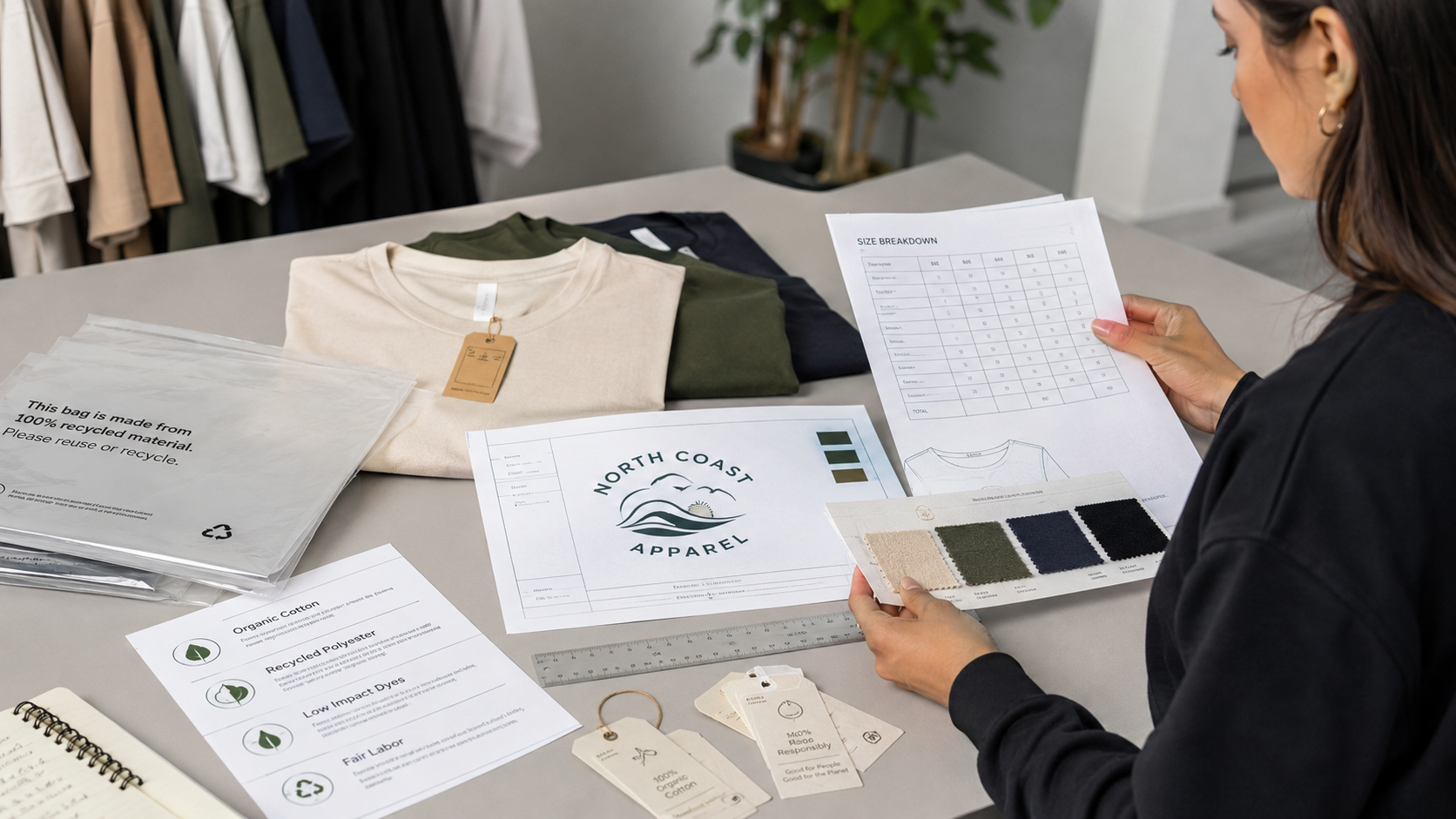
A detailed request helps the printer find options that meet both your environmental priorities and your operational needs. Send:
- Total quantity and approximate size breakdown
- Men’s, women’s, youth, unisex, or extended-size requirements
- Preferred fabric: organic cotton, recycled cotton, recycled polyester, natural fiber, or open to recommendations
- Required certifications or claims
- Garment color and acceptable alternatives
- Artwork in vector format when available
- Print locations, dimensions, and color count
- In-hand date and delivery locations
- Packaging preferences, such as bulk folding instead of individual polybags
- Budget range and whether reorders are likely
Apparel Junction can review these details and recommend an appropriate blank and decoration process through its custom T-shirt service and broader custom apparel services.
Best choice by buyer type
| Buyer | Good starting point | Why |
|---|---|---|
| Office manager ordering staff shirts | Durable cotton blend or certified cotton option | Balances comfort, repeated washing, size range, and budget |
| Outdoor crew or summer event | Recycled polyester performance shirt | Moisture management and faster drying |
| Retail brand or premium merch | Certified organic or recycled cotton | Strong story, softer hand, premium positioning |
| Growing team with changing headcount | Short runs or managed company store | Reduces obsolete inventory and improves reorder control |
| Arlington or DFW organization | Local consultation and sample review | Faster communication and easier proofing or pickup coordination |

Build a lower-waste custom apparel order
For eco-friendly custom T-shirt printing, Apparel Junction can help you compare garment materials, certifications, decoration methods, size planning, packaging, and reorder options without relying on vague claims.
Frequently asked questions
What is the most eco-friendly option for custom T-shirts?
The strongest eco-friendly custom T-shirt printing option is usually a durable shirt made with verified organic or recycled content, decorated with a print method suited to the artwork and ordered in a quantity the organization will actually use. There is no single best shirt for every order, so compare fabric certification, expected wear life, print durability, packaging, and shipping distance together.
Is organic cotton always better than recycled polyester?
Not in every situation. Organic cotton can be a strong choice for soft everyday shirts and natural-fiber preferences. Recycled polyester can be useful for performance apparel that must wick moisture and withstand frequent washing. The better choice is the garment that meets the wearer’s needs and stays in use longer.
Which printing method creates the least waste?
The answer depends on quantity, artwork, colors, and garment type. Screen printing can be efficient for planned bulk runs, while DTF or other digital methods can reduce setup waste on smaller or highly detailed orders. A qualified printer should recommend the method that avoids unnecessary test pieces, excess ink, and over-ordering.
Can I order eco-friendly custom T-shirt printing for a small team?
Yes. Eco-friendly custom T-shirt printing can work for small teams when you choose an available sustainable blank and a decoration method with practical minimums. Send the printer your quantity, sizes, artwork, due date, and preferred fabric claims so the quote can be built around realistic options.
What certifications should I look for on sustainable shirts?
Useful certifications and standards may verify organic content, recycled content, textile safety, or responsible manufacturing. Examples include the Organic Content Standard, Global Recycled Standard or Recycled Claim Standard, OEKO-TEX STANDARD 100, and other product-specific certifications. Ask for the exact certification connected to the specific garment style rather than assuming an entire brand is certified.
How can a business avoid greenwashing when ordering branded apparel?
Ask suppliers to replace broad words such as green or planet-friendly with specific, supportable facts. Request the garment’s fiber percentages, certification details, country of origin, print method, packaging choices, and care instructions. Keep those details with your purchasing records and use precise language when promoting the finished shirts.
Does Apparel Junction offer eco-conscious custom apparel in Arlington, Texas?
Apparel Junction can help Arlington and nationwide customers compare available organic, recycled, durable, and lower-waste custom apparel options. Availability varies by style, color, size range, quantity, and deadline, so the best next step is to request a quote with your priorities listed.
Final recommendation
The best eco-friendly custom shirt is not necessarily the garment with the longest list of claims. It is the option with verifiable attributes that fits your employees or customers, performs in its intended setting, stays in use, and can be reordered without creating unnecessary inventory. Start with your use case and quantity, then compare materials, certifications, decoration, packaging, and fulfillment as one complete system.
Browse available custom apparel products or contact Apparel Junction for help building the right order.